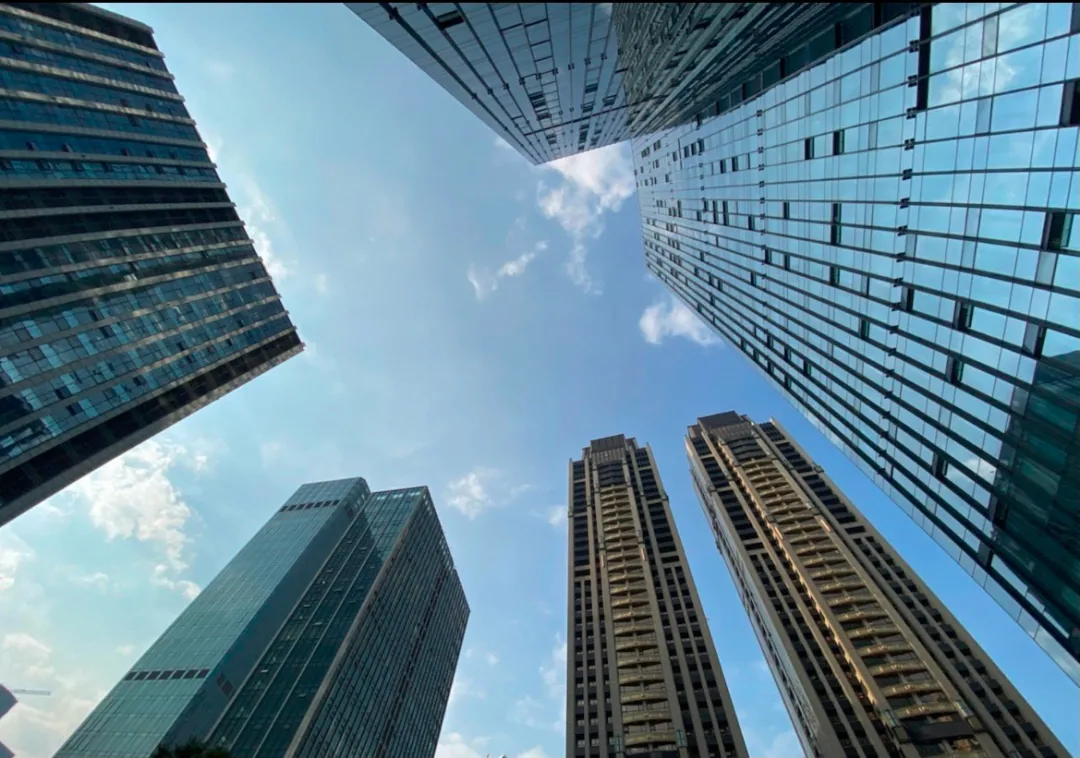
Why this page exists. Most bad Beijing rentals are not bad buildings — they are predictable mistakes made under time pressure. This page distils the four checks that experienced Beijing renters run before signing any lease. Pair it with the complete apartment hunting walkthrough and the renting basics guide for the full journey.
1. Think twice before taking a ground-floor flat
Ground-floor apartments in Beijing are usually the cheapest in a compound, and the discount is real — but so are the trade-offs. The first is sunlight. In a dense complex surrounded by towers, a first-floor flat can go most of the day without direct sun, which makes the rooms darker, colder in winter and slower to dry out.
The second is moisture. Beijing is a dry city for most of the year, but the summer rainy season can dump a startling amount of water on the capital — and ground-floor units absorb the consequences. Damp walls, musty wardrobes and mold creeping up door frames and skirting boards are classic first-floor complaints. A flat that feels fine in January can grow a fuzzy black border by August.
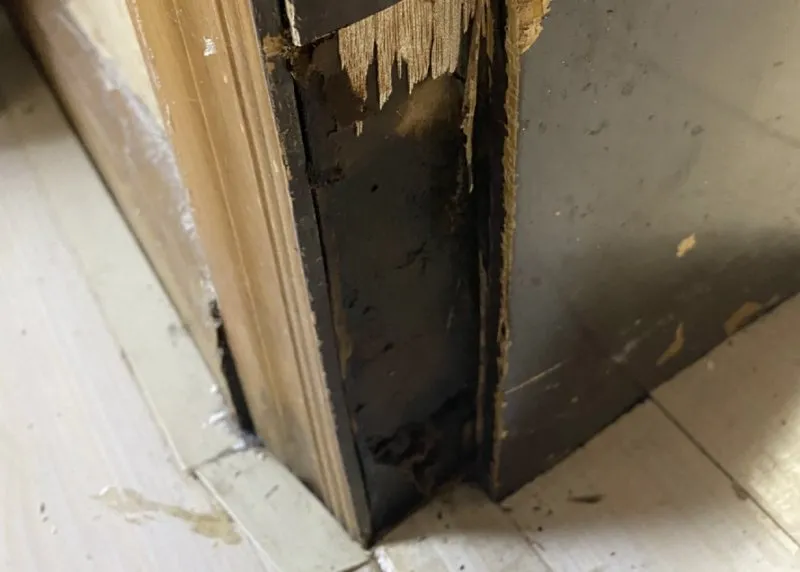
Then there is privacy and pests. At street level, life in the compound happens right outside your windows — closing the curtains all day is not really living. And ground-floor units share walls and pipe runs with the basement, which is exactly where cockroaches breed in summer. However spotless you keep the flat, they find the cracks.
The check: if you view a ground-floor flat, do it on a workday morning — you will see exactly how much light the rooms actually get and how much street life passes the windows. Ask directly about any history of mold or damp, and sniff the wardrobes and check behind furniture. Our types of housing guide explains how floor level varies by building type.
2. Choose a flat that does not face the street
Beijing is a big, loud city, and the compounds that sit right on an arterial road pay for the convenience in decibels. Street-facing rooms collect everything the road produces: buses accelerating from stops, delivery scooters, car horns late at night, and — in Chinese cities — the distinctive rhythm of early-morning square dancing and evening foot-traffic chatter drifting up from the pavement.
If you sleep lightly, a street-facing bedroom routinely means fragmented nights. Double glazing helps, but many older Beijing buildings still have single-glazed windows or balcony doors that seal like a sieve.
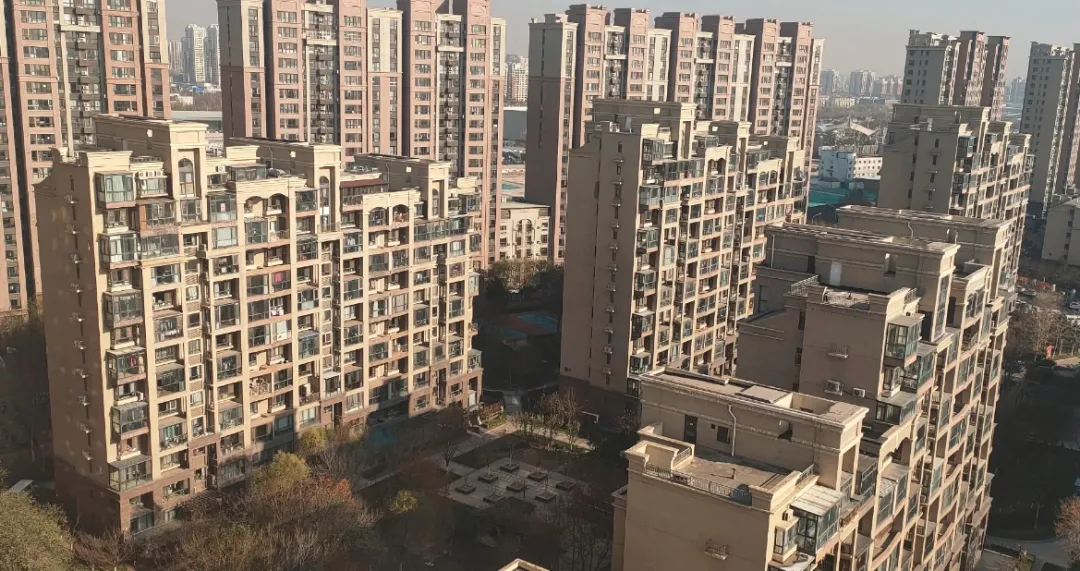
The check: prefer flats in the inner rows of a compound, facing the landscaped courtyard instead of the street. On the viewing, stand at the closed windows for a full minute and listen. If you can, come back at rush hour or after 10 pm — the same street sounds completely different at night.
3. Verify the walk to the subway — with your own feet
Whatever the rent, a Beijing apartment is only as good as its access to public transport. The subway is the city's bloodstream, and a flat near a line transforms your daily life; a flat far from any station quietly taxes you twice a day, in every season.
Here is the trap: listings and agents love to say "five minutes to the subway". That number is often decorative — picked to make the listing attractive rather than measured on the ground. Renters regularly discover, after moving in, that the promised five minutes is in fact a twenty-minute walk to the nearest station or bus stop, down roads with no pavements, in January wind.
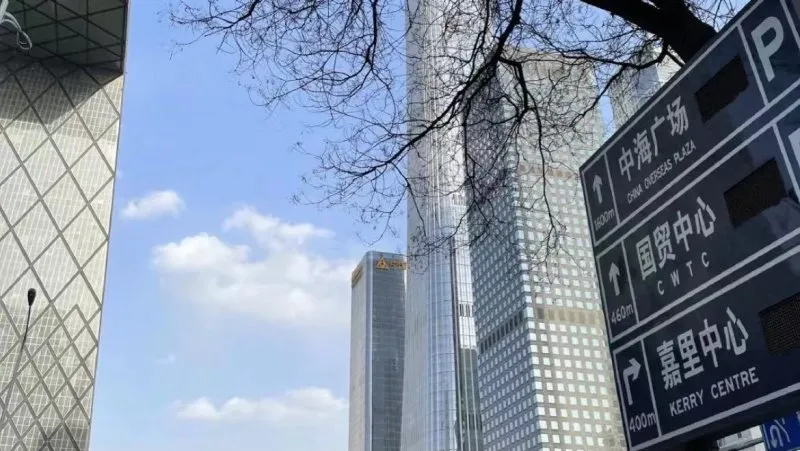
The check: before viewing, measure the distance from the building's gate — not the compound's marketing map — to the actual station entrance in a map app. A reasonable rule of thumb: if there is no subway station within one kilometre, think hard about the daily cost in time. And the true Beijing rental pro move: when you visit the flat, literally walk from the door to the station and time it. It takes ten minutes and settles the question forever.
4. Know exactly who you are paying — and how much, upfront
The most expensive surprise in Beijing renting is not the rent. It is the stack of payments that all come due at once. Through an agency, you typically pay a service fee before you even sign — commonly from half a month to a full month's rent, and sometimes again at every renewal. On top of that comes the deposit, and then the first rent cycle, which in the standard 押一付三 arrangement means one month's deposit plus three months' rent in advance.
Add it up and move-in day can easily demand the equivalent of four to five months' rent in a single payment. Budget for it in advance — it is the single biggest cash-flow shock of the first year.
| Upfront item | Typical amount | Notes |
|---|---|---|
| Agency service fee | 0.5 – 1 month's rent | Sometimes charged again at each renewal |
| Deposit (押金) | 1 month's rent | Refundable at move-out, minus deductions |
| First rent cycle (付三) | 3 months' rent | The standard 押一付三 structure |
| Total at signing | ≈ 4.5 – 5 months' rent | All due on or before move-in day |
Monthly payment changes the maths. China's big managed-rental platforms let tenants pay month by month instead of three months upfront — a lifesaver for cash flow, and the reason they dominate the expat market. The trade-off is price: the monthly option typically adds around ten percent of the rent as a service fee, folded into each month's payment, so the platform collects the equivalent of its annual fee spread across twelve months. On a ¥5,000 flat, that is roughly ¥500 a month — you are effectively buying liquidity, so decide consciously whether it is worth it.
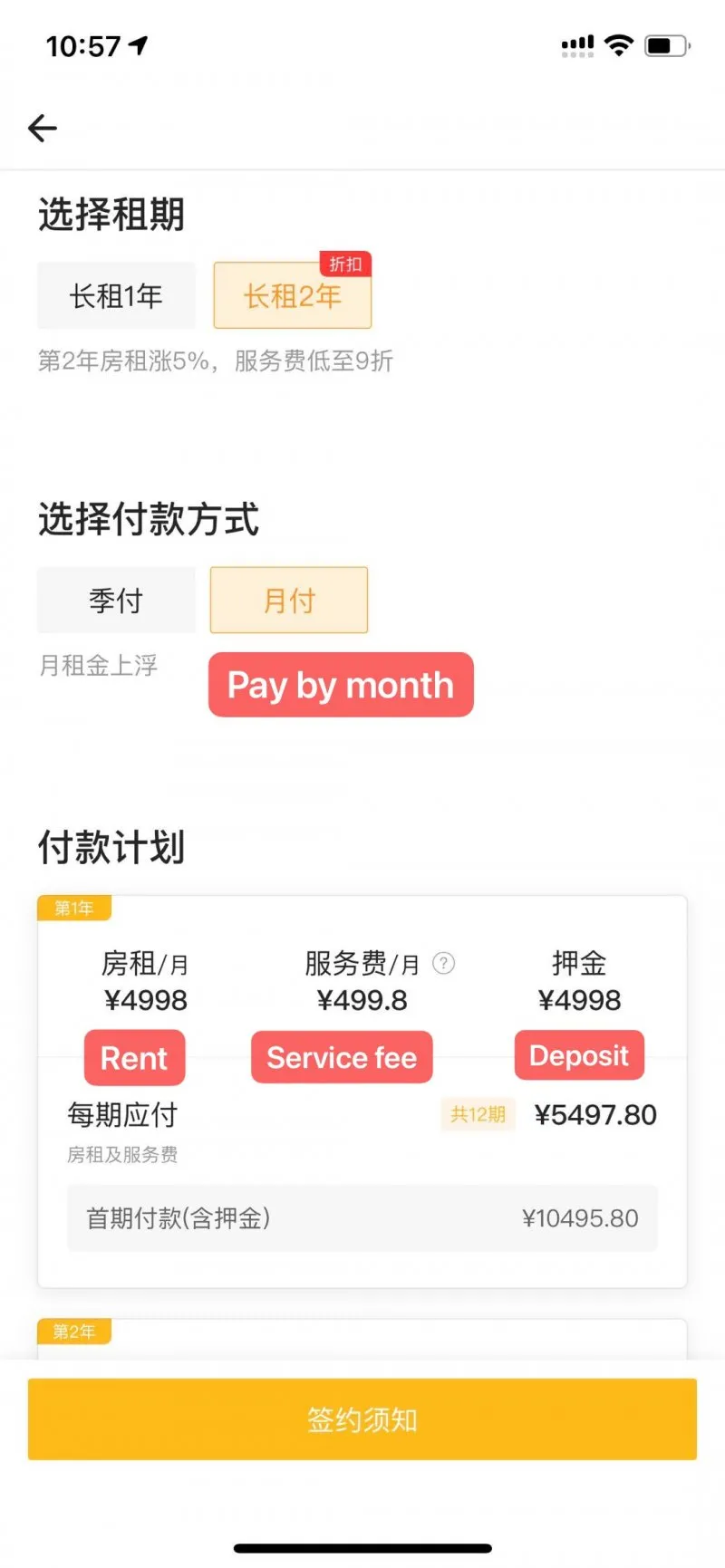
The check: before signing, ask for the complete payment schedule in writing — every fee, every date, every amount. Compare the annualised cost of monthly payment versus quarterly payment, and check whether the agency fee recurs at renewal. For the contract clauses that protect your deposit, see our lease agreements guide and the legal traps guide.
The five-minute pre-signing checklist
- Floor: not ground level — or if it is, check for mold, damp smells and morning light.
- Facing: courtyard-facing, not street-facing; listen at the closed windows for a full minute.
- Commute: walk door-to-door to the subway entrance and time it — ignore the listing's "5 minutes".
- Money: get the full payment schedule in writing: service fee, deposit, rent cycle, renewal fees, and the ~10% premium if you pay monthly.
Common questions
- Are ground-floor apartments always a bad idea in Beijing?
- Not always — some ground-floor units face south into open space and stay bright and dry. But the risk of mold in the rainy season, summer pests and limited privacy is real, so the discount needs to be worth it and the flat needs a personal inspection.
- How far is too far from a subway station?
- Most long-term renters are happiest within a 10–15 minute walk (roughly one kilometre). Beyond that, check bus connections and consider an e-bike — but factor in the winter cold and summer rain.
- How much cash do I need on signing day?
- Plan for four to five months' rent at once: the deposit, the first three-month rent cycle, and the agency service fee. Monthly-payment platforms reduce the rent portion but add about 10% in service fees.
- Is paying monthly worth the ~10% premium?
- If paying three months upfront would strain your finances or you expect to leave early, monthly payment buys flexibility and is usually worth it. If your cash flow is comfortable, quarterly or annual payment is materially cheaper over a year.
- What if I find mold after moving in?
- Photograph it immediately, notify the landlord or platform in writing, and ask for remediation before the rainy season peaks. For your rights and the deduction rules at deposit return, see the lease agreements and legal traps guides.
Go deeper on Beijing
- Renting in Beijing: the basics — a starter guide
- How to find and rent an apartment in Beijing — the complete walkthrough
- Beijing housing costs 2026 — rent, deposits, agent fees
- Beijing lease agreements — deposits, clauses, registration
- Renting in Beijing: legal traps foreigners face
- Types of housing in Beijing — compared
- Beijing rental guide — areas, rents and expat tips
- Expat FAQ